Greece for First-Timers: What to See, When to Go, and How to Get Around
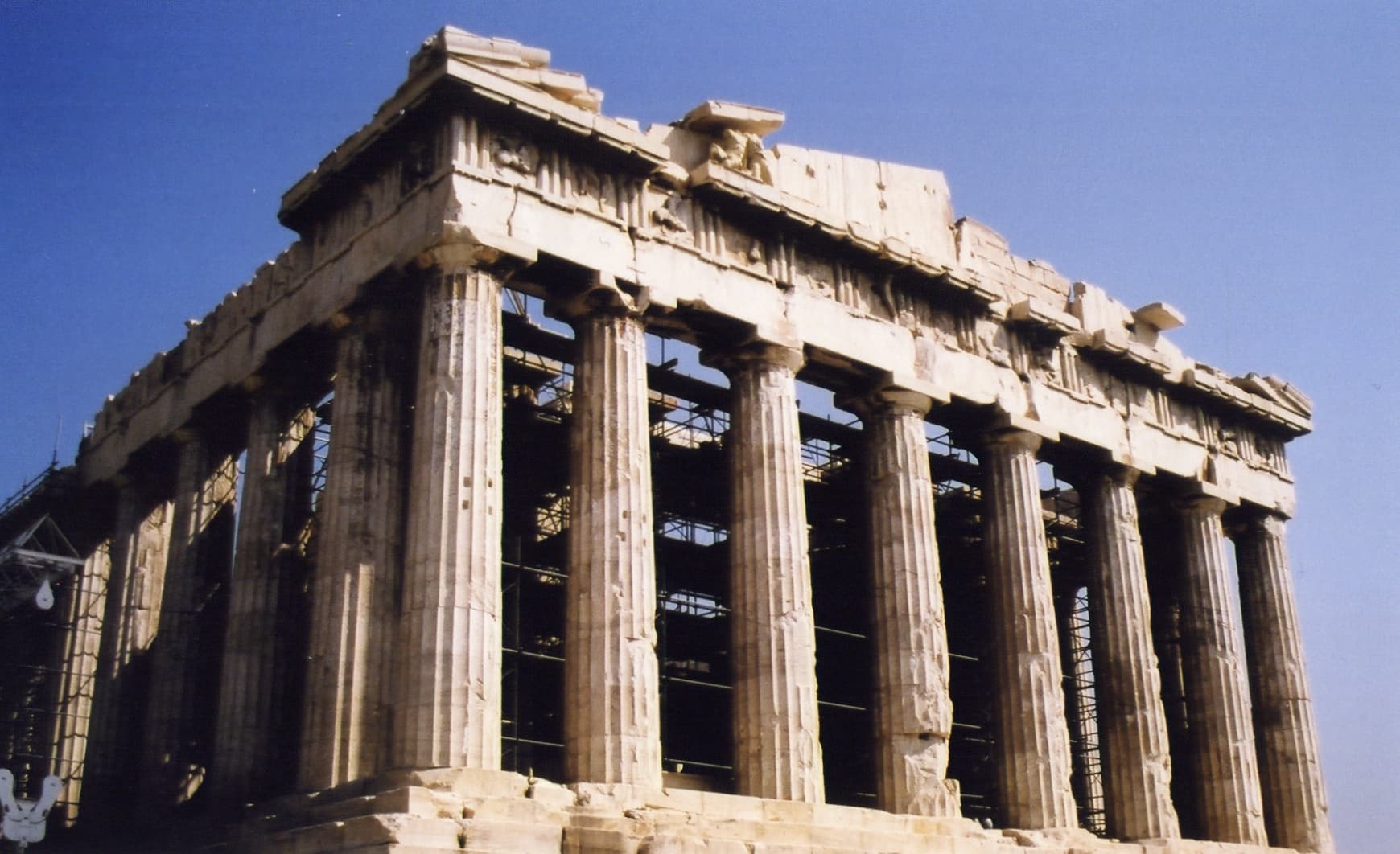
Stand on the Acropolis at sunset and you're looking at roughly 2,500 years of continuous human ambition, stacked one civilization on top of the next, with the modern city of Athens sprawling out beneath it in every direction. That contrast — ancient stone next to a living, noisy, thoroughly modern country — is the thing most first-time visitors to Greece aren't quite prepared for. Greece isn't a museum. It's a place where the ruins and the beach bars share a coastline, sometimes a single afternoon.
This guide is built for someone doing that trip for the first time: what's actually worth seeing, when to go, how the logistics work, and the practical details — money, food, transport, entry rules — that don't usually make it into the highlight reel.
First, the paperwork
If you're arriving from the US, UK, or most of Europe, the good news is simple: no tourist visa is required for stays of up to 90 days in any rolling 180-day period, since Greece is part of the Schengen Area. Two things worth knowing for 2026 specifically:
- EES (Entry/Exit System): border crossings now record passport details, a facial image, and — in some cases — fingerprints electronically. It happens automatically at the border; there's nothing to apply for in advance.
- ETIAS: starting in the last quarter of 2026, visa-exempt travelers will need to apply online for ETIAS authorization before flying to Greece, at a cost of €20 (free under 18 or over 70).
Your passport needs to have been issued within the last 10 years and remain valid for at least three months past your planned departure from the Schengen Area — a common reason for being turned away at check-in, and one that's easy to miss if you last checked your passport years ago.
When to go — and why the calendar matters more than you'd think
Greece's tourist season doesn't just fluctuate with the weather — it's built around the Greek Orthodox calendar. Orthodox Easter (April 12 in 2026, and always falling between April 4 and May 8) is treated locally as the unofficial start of the season: hotels on islands like Rhodes and Crete plan their reopening schedules around it, and the first wave of seasonal flights and ferries follows shortly after.
From there, the season breaks down roughly like this:
- April–May: the shoulder season proper. Temperatures average around 21°C (70°F) by May, wildflowers are out, and major sites are walkable without the summer queues.
- June: still one of the driest months of the year, with average temperatures climbing to about 27°C (81°F) — warm enough to swim, just before the crowds peak.
- July–August: peak season, and it's peak for a reason — this is also the best window for nightlife on islands like Mykonos. It's also the hottest, busiest, and most expensive stretch, with ferries and popular tavernas booking out.
- September–October: frequently cited by travel writers as the best all-around window — summer-grade weather with a fraction of the crowds. Most islands stay open through October before starting to wind down.
- November–February: the rainiest months, particularly in western Greece, and the point at which many smaller islands close almost entirely for the winter.
If this is your first trip and you have any flexibility, September is the single best-supported recommendation across travel guides: warm sea, thinner crowds, and everything still open.
Getting there, and getting around
Most international flights land at Athens International Airport (Eleftherios Venizelos), though Santorini, Mykonos, Heraklion (Crete), and Rhodes all have their own airports with seasonal direct flights from parts of Europe.
Once you're in the country, you have three real options for island-hopping:
- Ferries are the classic choice and, for short-to-medium hops — Athens to Paros, Naxos, or Mykonos, for instance — genuinely part of the experience rather than just transport. Blue Star Ferries is the largest operator, alongside Seajets and Hellenic Seaways.
- Hydrofoils ("flying dolphins") cover some of the same routes faster, at roughly double the ferry fare.
- Domestic flights, mainly via Aegean Airlines, make more sense for longer jumps — Athens to Rhodes or Kos, for example — where a ferry would eat most of a day. Cheap seats sell out fast in high season, so book at least a month out if you're traveling June through August.
One detail that trips up first-timers planning shoulder- or off-season trips: ferry frequency drops sharply outside summer. A route running daily in July can shrink to two or three sailings a week by January, and some connections between smaller Cycladic islands (think Ios, Folegandros, Milos, Koufonisia) can stop entirely — those islands largely shut down from late October through April, hotels and restaurants included. If you want island time outside peak season, stick to islands with year-round populations and infrastructure: Crete, Rhodes, Corfu, and Zakynthos all keep running through winter.
See it for yourself
The essential stops
Tap any destination to see hotels and availability there right now.

The essential stops
Athens and the Acropolis
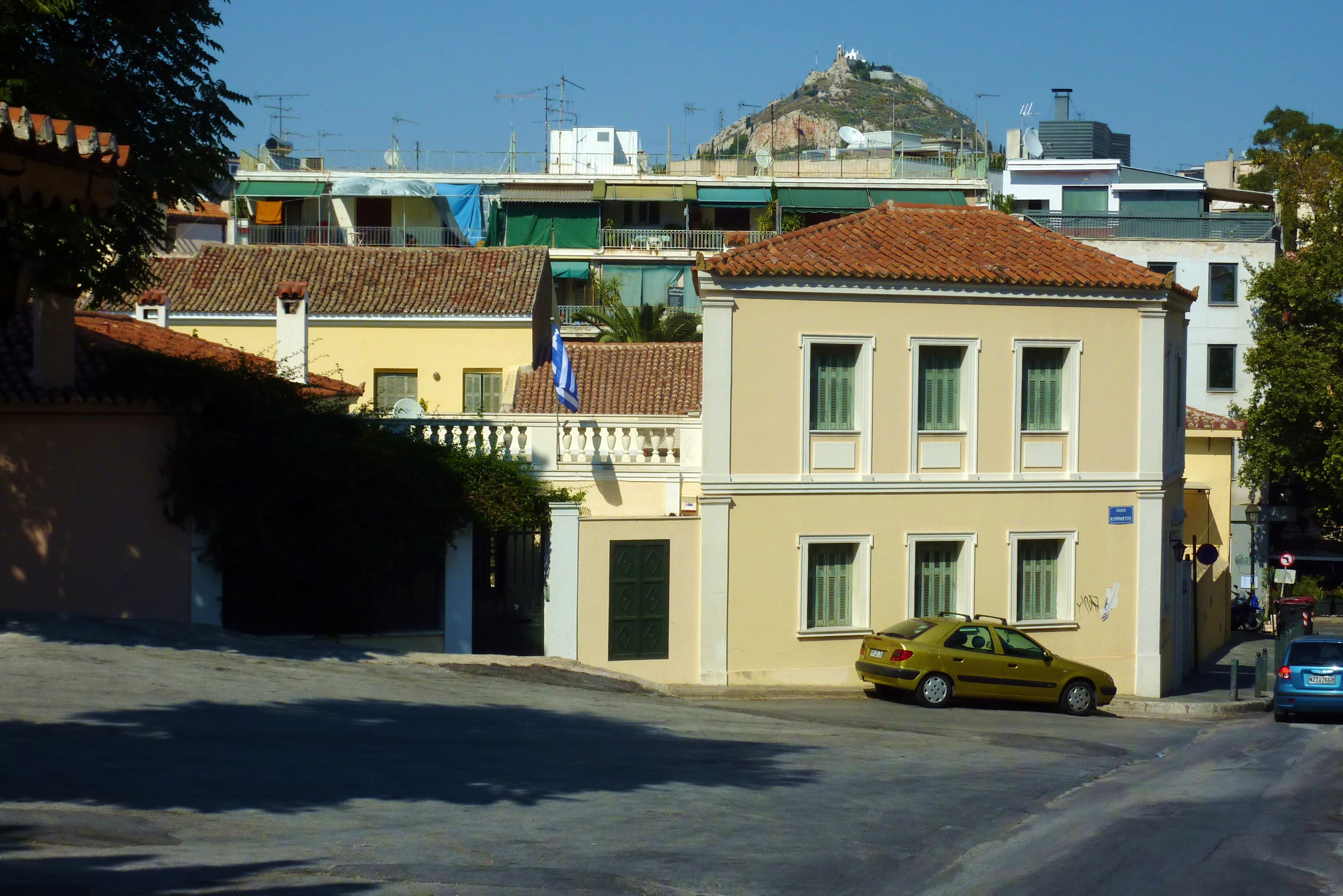
The Acropolis dates to as early as 510 BC and remains Greece's most-visited landmark and a UNESCO World Heritage Site — reason enough to make it your first stop, not an afterthought before flying to an island. At its base, the old neighborhood of Plaka is where to eat and wander afterward.
Santorini
The caldera that makes Santorini famous is the scar of one of the largest volcanic eruptions in recorded history — the Minoan eruption, around 1600 BC, which collapsed the volcano's center and flooded the resulting crater. The white towns of Oia and Fira sit along that rim, in places up to 300 meters above the sea, which is what produces the postcard sunset shots everyone's seen before they ever book the flight.
Mykonos
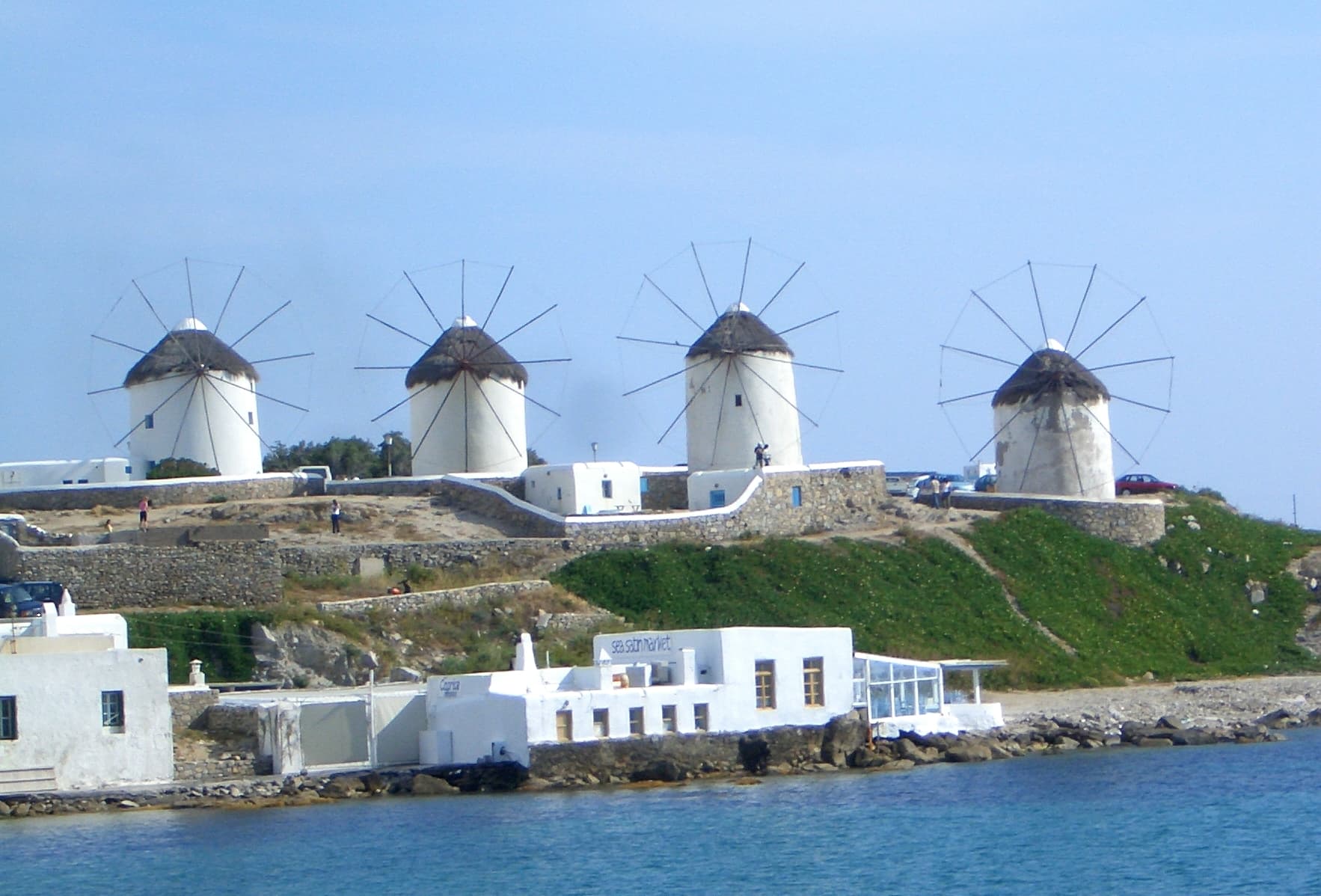
Mykonos Town's two signature sights are its windmills and Little Venice. Most of the surviving windmills were built by the Venetians starting in the 16th century to mill wheat; seven still stand on the hill above town, and the oldest, Geronymos Mill, dates to the 18th century. Little Venice itself, just below, was settled by merchants and sea captains in the 1700s — the balconies still hang directly over the water.
Crete and the Palace of Knossos
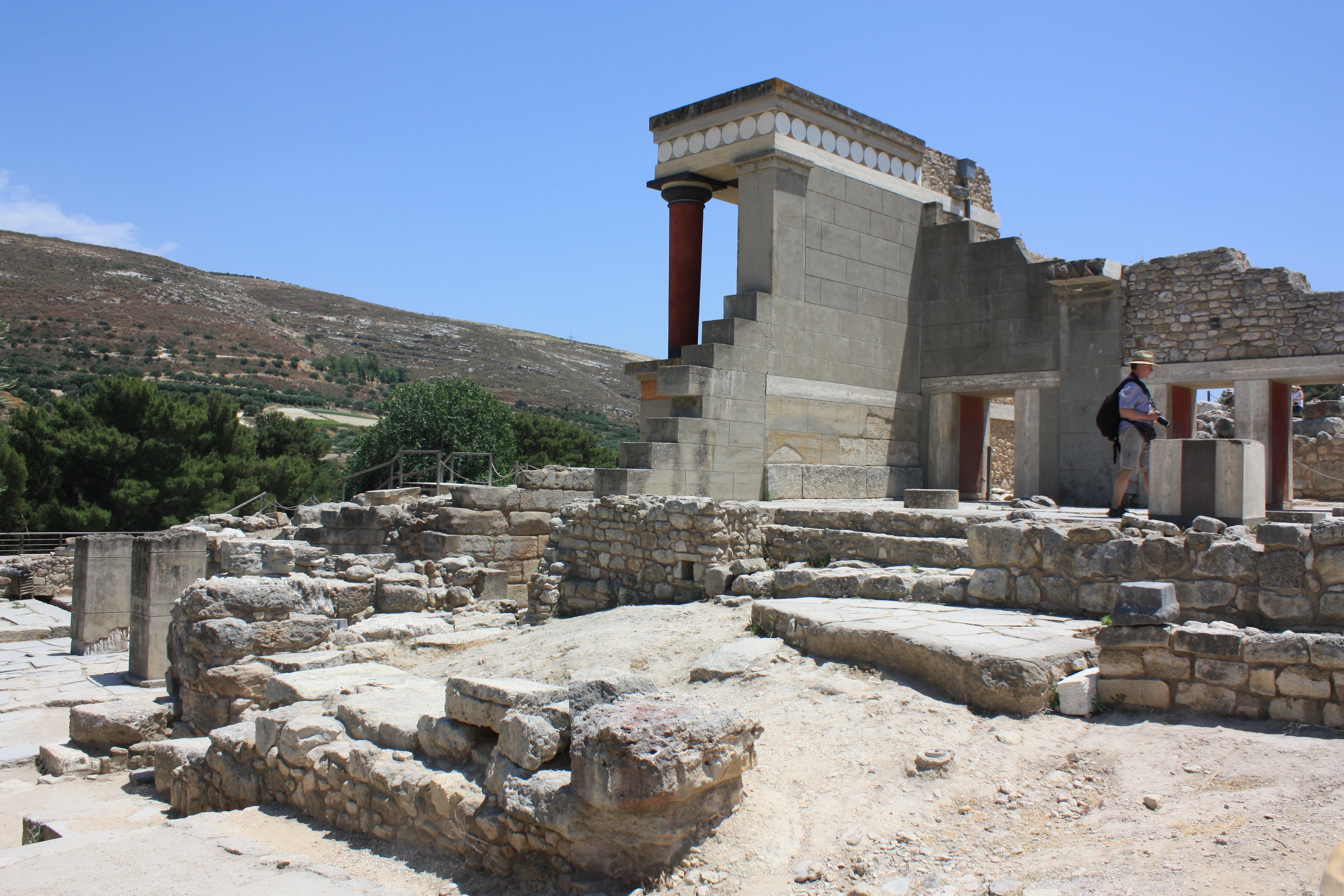
Crete is Greece's largest island, and Knossos, just outside Heraklion, is the largest Bronze Age site on it — construction began around 1900 BC, and at its peak the palace held more than a thousand interconnected rooms. It served as the ceremonial and political center of the Minoan civilization, arguably Europe's first complex urban society.
Meteora
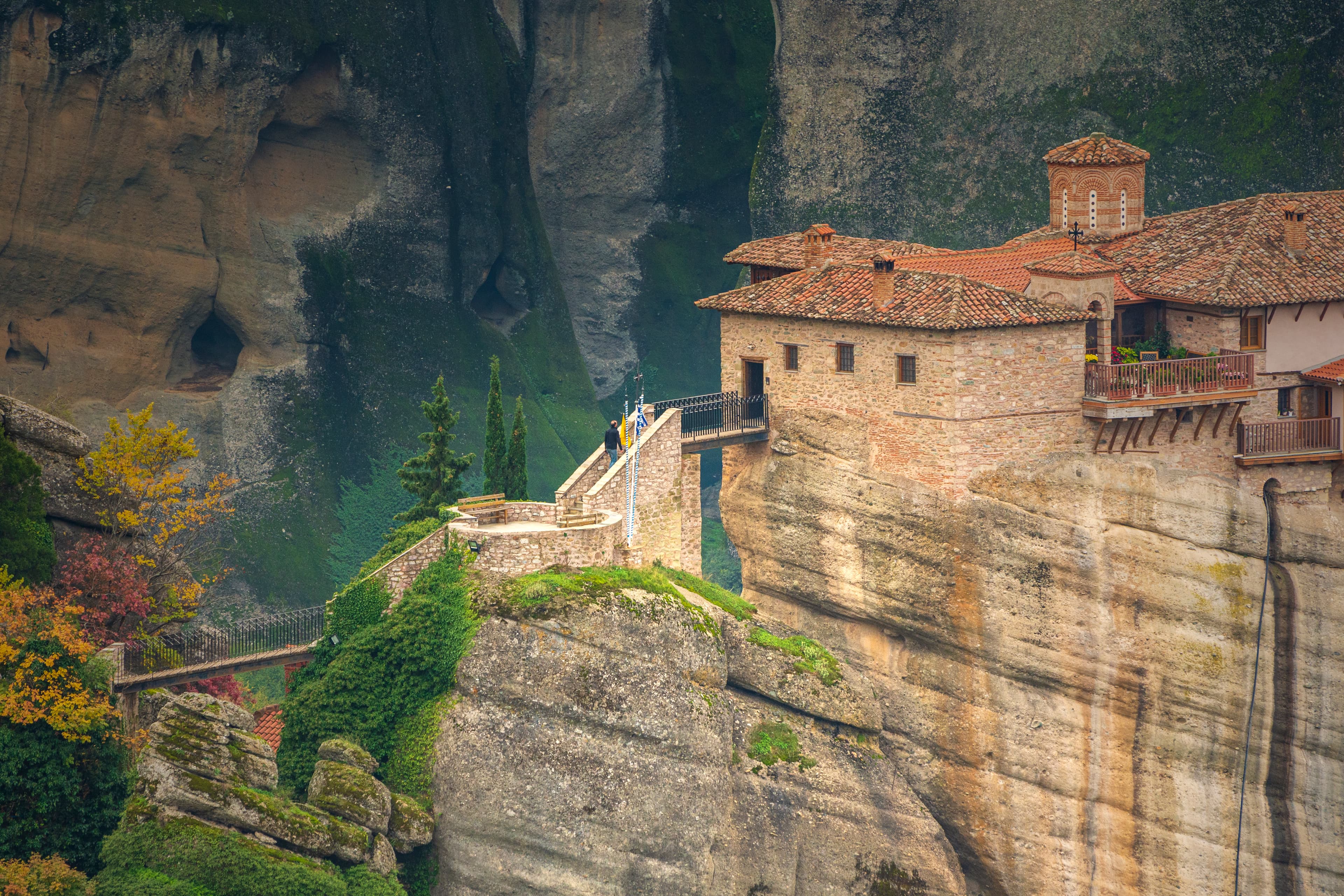
In central Greece, monasteries perch on sheer sandstone pillars first settled by monks in the 11th century. Of the 24 monasteries built here during the 15th century, six remain active today, and the site holds a rare dual UNESCO listing for both cultural and natural significance.
Delphi
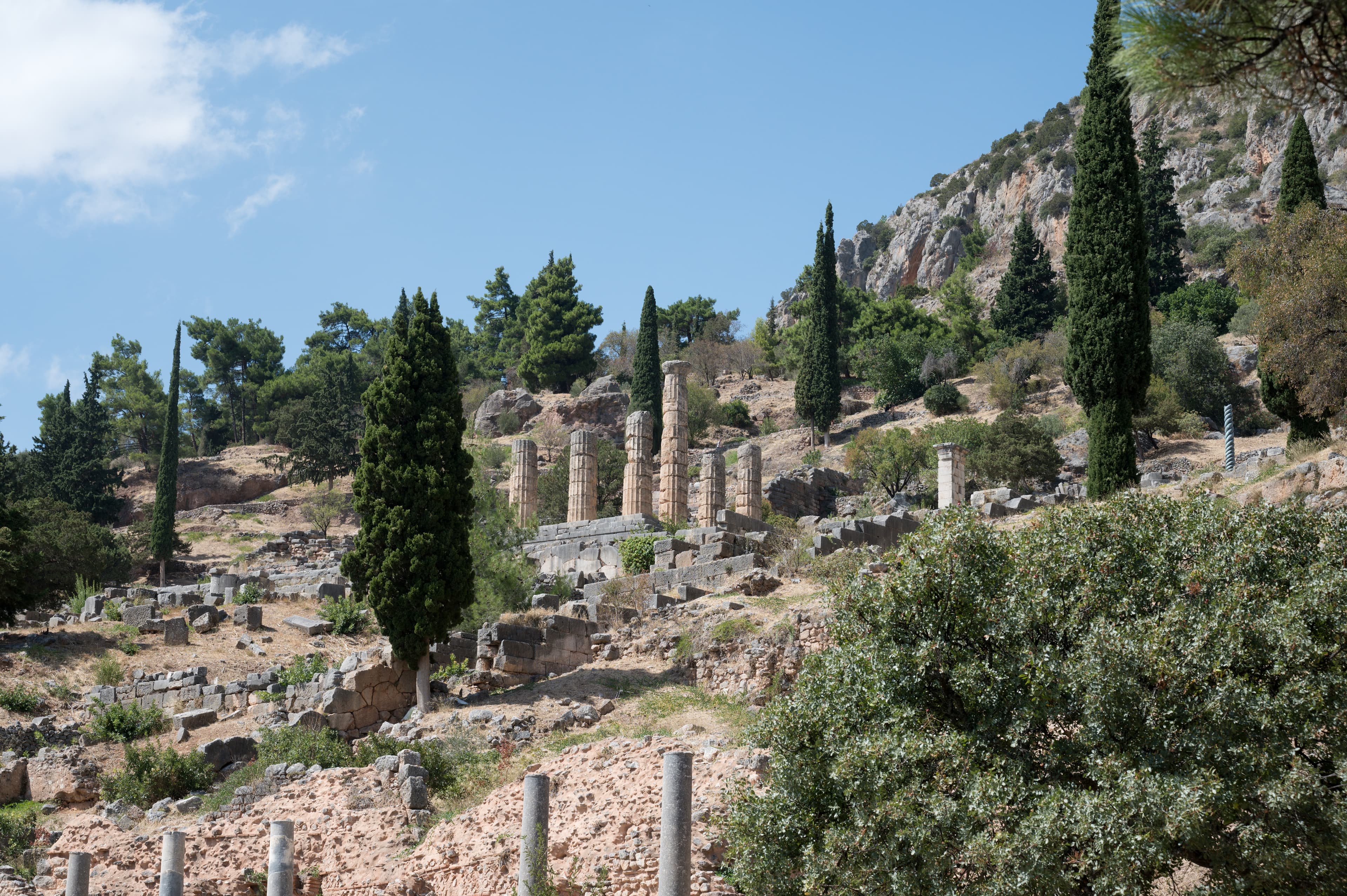
Ancient Greeks believed Delphi marked the "navel of the world" — the point where two eagles released by Zeus, one from the east and one from the west, were said to have met. From the 6th century BC, it was the seat of the Oracle of Apollo, consulted on everything from personal matters to declarations of war. It's been a UNESCO World Heritage Site since 1987.
Rhodes
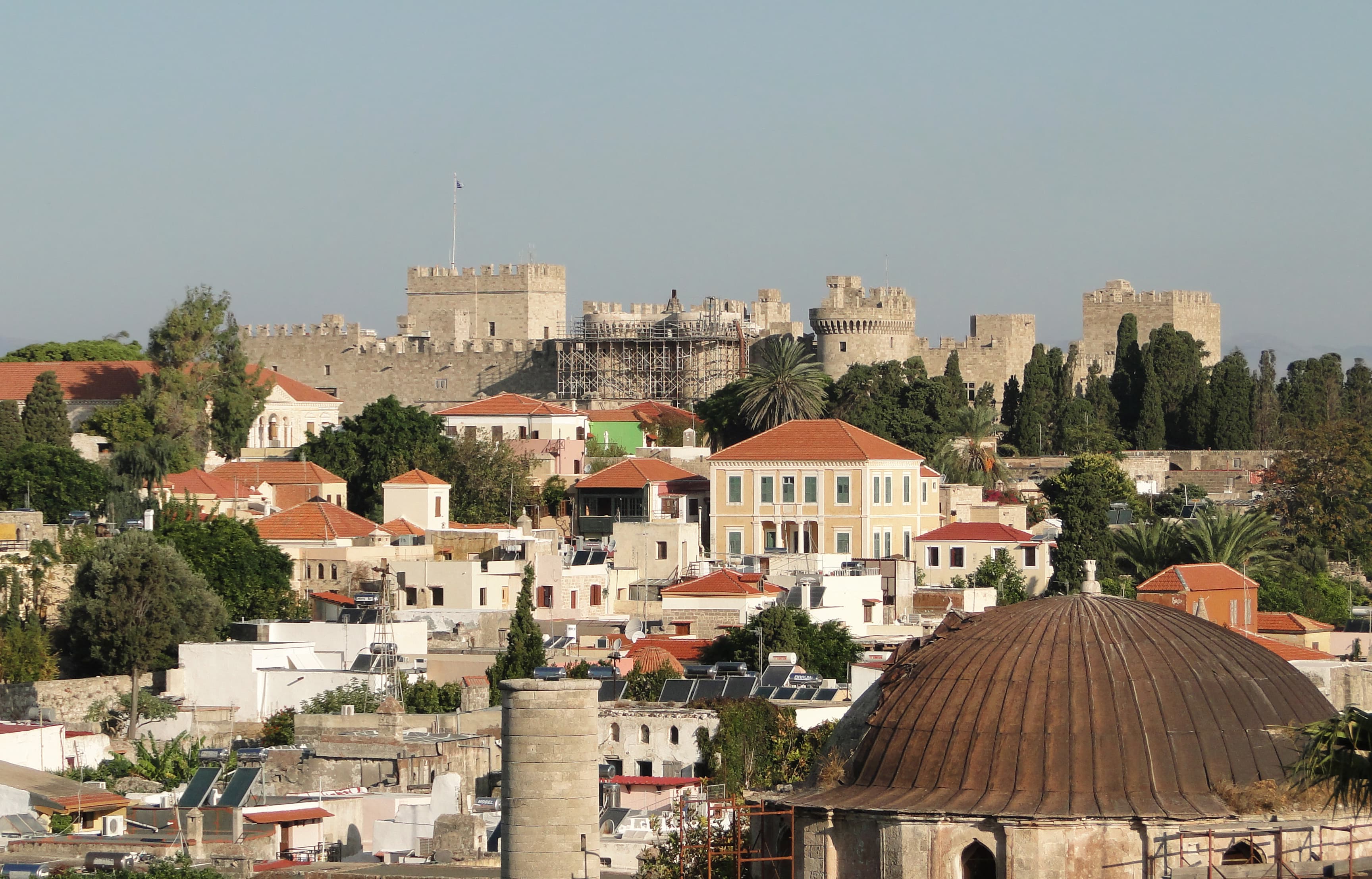
The Old Town of Rhodes is a UNESCO-listed medieval quarter where Byzantine churches sit alongside remnants of the Crusader-era Knights of St. John — one of the best-preserved medieval towns anywhere in Europe, and walkable in an afternoon.
What you'll eat
Greek food earns its reputation. Moussaka — a layered casserole of eggplant, cinnamon-spiced minced meat, and béchamel — was given its modern form by chef Nikolaos Tselementes in the early 20th century, though the underlying technique goes back further. Souvlaki, grilled meat on a skewer served in pita, has origins traceable to references in Homer. Tzatziki, the cucumber-yogurt-garlic sauce alongside nearly everything, and a proper Greek salad topped with a slab of PDO-certified feta round out the basics you'll eat almost daily.
A practical note on money: tipping isn't mandatory in Greece the way it is in the US, but it is customary — expect to round up or add 5–10% at restaurants, more for exceptional service, and carry small change, since many places don't run tip lines through card machines and prefer cash tips directly.
Is it safe?
Yes, by most available measures. Greece climbed to 53rd place globally in the 2026 Global Peace Index, put together by the Institute for Economics and Peace, and is classified among the world's "highly peaceful" countries, with low violent crime rates — a relevant data point if personal safety is part of your planning, particularly for solo travelers.
Building a first itinerary
A workable structure for a first trip: three or four days in Athens (Acropolis, Plaka, a day trip out to Delphi or Meteora), then one or two islands reached by ferry or short flight — Santorini or Mykonos for the classic Cycladic postcard, or Crete if you'd rather split time between beaches and Minoan ruins in one place.
Whatever combination you land on, book early if you're traveling in peak season — the best small hotels in Santorini, Mykonos, and Rhodes' Old Town routinely sell out months in advance. You can compare current rates and availability across our partner hotels in Greece on the search page.
Ready to start planning your trip to Greece?
Photo credits
- The Acropolis, Athens — Glen Larson, public domain, via Wikimedia Commons
- Plaka, Athens — Spyrosdrakopoulos, CC0, via Wikimedia Commons
- Oia, Santorini — LBM1948, CC BY-SA 4.0, via Wikimedia Commons
- Windmills of Mykonos — Dinkum, CC0, via Wikimedia Commons
- Palace of Knossos, Crete — Simon L. Kozhin, CC BY-SA 3.0, via Wikimedia Commons
- Rousanou Monastery, Meteora — Ioannis Ioannidis, CC BY-SA 4.0, via Wikimedia Commons
- Temple of Apollo, Delphi — Zde, CC BY-SA 4.0, via Wikimedia Commons
- Old Town, Rhodes — Bernard Gagnon, CC BY-SA 4.0, via Wikimedia Commons